I have spent a decade in the trenches of product marketing and growth. I’ve sat in rooms where teams cheered for a 10% lift in first-time acquisitions, only to watch those same users vanish within 48 hours. The culprit is almost always the same: they built a funnel for a transaction, not a path for a relationship.
Most growth strategies fall into one of two buckets. You are either mining for gold—finding a user, grabbing their cash, and moving to the next—or you are farming. You are planting seeds, nurturing the soil, and building a system where the user wants to return. If you are stuck in the "mining" phase, you are constantly fighting the uphill battle of high Customer Acquisition Costs (CAC).
Let’s talk about the hard shift from one-time transactions to a long-term retention strategy.
What is a One-Time Transaction?
A one-time transaction is a single point of value exchange. You provide a product; they provide money. The interaction ends the moment the confirmation screen loads. This is the model that legacy businesses clung to for decades. In the age of mobile apps, however, this model is a death sentence.
If your strategy assumes that the job is done once the payment clears, you aren't doing product marketing; you’re doing short-term accounting. You aren’t building equity in your user base; you’re simply paying for rented attention.
The Retention Strategy: The "Repeat Interaction" Engine
A retention strategy is the opposite. It’s an ecosystem designed to keep the user inside your app, platform, or service loop. The goal isn't just the sale—it's the next session.
I always ask product teams one question: "What does the user do next?" If the answer is "nothing," or "close the app," you have a retention problem. A successful strategy requires a continuous interaction loop where every action taken by the user creates a hook for the next visit.
Think about streaming platforms. They don’t just want you to watch one movie; they want to know what you’ll watch on Friday night. Their entire interface is a feedback loop: you watch, they track, they recommend, you return. That is a retention-first architecture.
The "Tiny Frictions" That Kill Retention
I keep a running list of "tiny frictions." These are the invisible enemies of growth. When I audit mobile apps, I’m looking for:

- Excessive loading states that lack skeleton screens. Forced sign-up walls before the value proposition is clear. Notification fatigue that doesn't trigger a specific, helpful user action. Deep-link failures that dump users on the homepage instead of the specific content they clicked on.
If you aren't obsessing over mobile performance, you’ve already lost. A one-second delay in page load time can tank your retention rates by double digits. If your app feels "heavy" or "clunky," the user will stop coming back. Frictionless UX isn't a "nice to have"—it’s the foundation of your recurring revenue.
Gamification and Personalization: The Secret Sauce
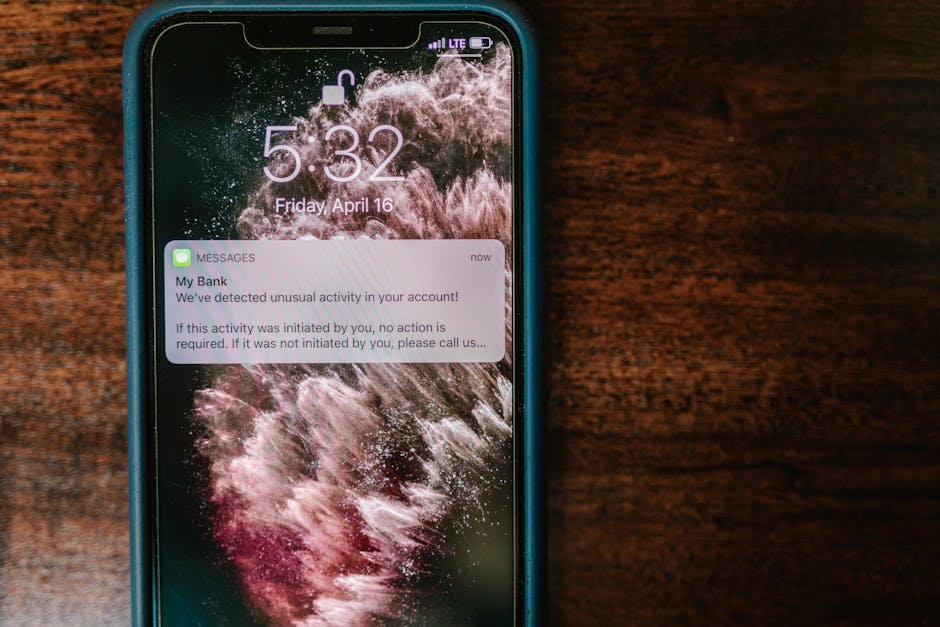
Retention isn't just about UI; it's about psychology. We’ve seen incredible advancements in gamification, even in non-gaming contexts. Take MrQ, the casino app. They didn't just digitize a slot machine; they built a community and an engagement layer that feels inherently "sticky." They use gamification mechanics—like progression bars, transparent rules, and community-driven milestones—to turn a standard transactional experience into a habit-forming one.
When you apply these non-gaming mechanics to productivity apps, fintech, or SaaS, you transform the user's perception of "work" into "progress."
Personalization as the Retention Engine
McKinsey Digital has written extensively about the "Personalization at Scale" imperative. It’s no longer optional. If your app shows every user the exact same dashboard, you are wasting the most valuable real estate in your product.
Recommendation engines—the same tech powering your favorite streaming platform—should be integrated into your onboarding and lifecycle flows. If a user is interested in "Category A," your lifecycle email sequence shouldn't be talking about "Category B." That is a break in the loop. That is where users churn.
Comparing Transactional vs. Retention Metrics
To move retention loops from transactional to retention-focused, you must change what you measure. Stop worshipping at the altar of raw downloads.
Metric Transactional Focus Retention Focus Primary KPI Total Conversions Customer Lifetime Value (CLV) Success Signal Revenue per Sale Daily/Monthly Active Usage (DAU/MAU) Optimization Landing Page CTR Time-to-Value (TTV) UX Goal Checkout Speed Session FrequencyThe B2B Perspective
Even in B2B SaaS, the rules don't change. I often reference content from the B2B News Network (B2BNN), which highlights how "customer-centricity" is the new competitive advantage. In B2B, the "transaction" is the renewal. If you haven't been building a retention strategy throughout the year, the renewal meeting becomes an existential threat rather than a business formality.
B2B teams often hide behind "enterprise complexity." They blame long sales cycles for their inability to build sticky loops. But the best B2B SaaS teams I work with are stealing playbooks from mobile gaming: they use in-app notifications, progress-based onboarding, and personalized data insights to prove value every single day, not just at the end of the contract.
How to Start Building Your Retention Loop
Map the "Value Moments": Identify the exact point where a user realizes why they downloaded your app. Make that moment as frictionless as possible. Fix the Mobile Performance Debt: If your team tells you that images are slow because of "content richness," tell them that "performance is the product." Optimize your assets. Build a Lifecycle, Not a Blast: Stop sending generic email blasts. Use your recommendation engine to segment users based on their repeat interaction patterns. If they haven't logged in for 3 days, send them the "Next Value" item, not a "We miss you" coupon. Audit Your "Tiny Frictions": Spend one hour using your own app on a budget smartphone. Every time you feel a moment of hesitation or irritation, write it down. That list is your roadmap for the next sprint.Final Thoughts: The CLV Multiplier
Customer Lifetime Value (CLV) is not a vanity metric—it is the direct output of a well-executed retention strategy. When you move away from the transactional trap, you stop being a commodity. You stop being a "one-and-done" utility. You become a part of the user's daily habits.
Stop worrying about the sale, and start worrying about the next session. When you focus on what the user does next, the revenue will follow.